
Mecha anime built the modern anime industry. Giant robots fighting other giant robots, piloted by humans with something to lose — it sounds simple. The best mecha anime use that framework to tell stories about war, adolescence, identity, and what it means to sit inside something that can destroy a city and make decisions about when to pull the trigger.
If you have never watched mecha anime, you have missed a genre that shaped almost everything you love about anime. These are the series worth starting with.
1. Neon Genesis Evangelion (1995)
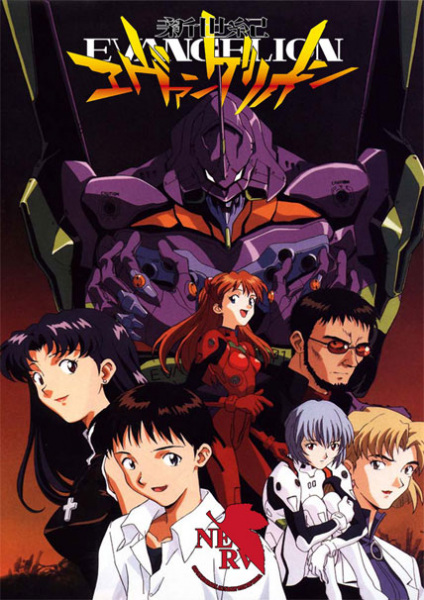
Evangelion is the most influential anime ever made. I do not say that lightly or to sound like I am stating the obvious — I say it because nothing in anime has been more imitated, more referenced, more argued over, or more responsible for the specific form of modern anime than what Hideaki Anno made between 1995 and 1997.
Shinji Ikari is fourteen years old. He has not seen his father in years. His father calls him to Tokyo-3 and puts him inside a giant mecha called an Evangelion and tells him to fight a monstrous being called an Angel that is trying to destroy the city. Shinji does not want to. He has no training. He is visibly terrified. He climbs in anyway because his father's rejection would hurt more than getting killed.
The first half of the series functions as an excellent action anime with unusually deep psychological work. The second half becomes increasingly abstract as the production budget collapsed and Anno's own mental breakdown entered the text. The television ending is completely subjective — just characters talking in empty space about their own minds.
The theatrical ending, End of Evangelion, shows what those final episodes were intended to look like. It is the most disturbing and spectacular anime film I have seen. Watch the series first. Watch End of Evangelion second. The Rebuild of Evangelion tetralogy from 2007–2021 is an alternate retelling worth watching eventually but not as a replacement.
Episodes: 26 + End of Evangelion | Genre: Mecha, Psychological, Sci-Fi
---
2. Code Geass (2006–2008)
Code Geass is the most purely entertaining mecha anime. Where Evangelion is about suffering and self-destruction, Code Geass is about chess — specifically, about a boy who plays chess at a scale that makes world governments the pieces.
Lelouch vi Britannia is an exiled prince living in conquered Japan under a false name. He accidentally receives a power called Geass — the ability to give one absolute command to any person who meets his eyes, usable once per person. He immediately uses this to begin organizing a rebellion against the Britannian Empire under the masked identity Zero.
The mecha battles in Code Geass are almost secondary to the political and strategic plotting. Lelouch is always several moves ahead of everyone around him, and watching him construct and execute plans that span multiple episodes is genuinely thrilling. The show also has the courage to follow its own logic through to the end — the finale is one of the most discussed endings in anime history, and I think it is exactly right.
Season 1 is tight and excellent. Season 2 is somewhat messier but escalates properly. Watch both.
Episodes: 50 + movies | Genre: Mecha, Military, Sci-Fi
---
3. Mobile Suit Gundam: Iron-Blooded Orphans (2015–2017)
The Gundam franchise has been running since 1979 and produced many excellent series. Iron-Blooded Orphans is the one I recommend to people who have never watched Gundam because it requires no prior franchise knowledge and has the strongest standalone story.
A group of child soldiers working as mercenaries on Mars get betrayed by their employers and decide to escort a political refugee to Earth themselves. They have one functioning Gundam — the Barbatos — and a great deal of tactical desperation.
Iron-Blooded Orphans is honest about war in ways that most mecha anime are not. People die regularly, without dramatic last speeches, because wars kill people without ceremony. The enemy organization is not cartoonishly evil — it is a bureaucracy invested in maintaining its power, which is a far more recognizable kind of threat. Season 2 escalates the political complexity and ends in a way that was not what audiences expected. It is correct.
Episodes: 50 | Genre: Mecha, Military, Drama
---
4. Tengen Toppa Gurren Lagann (2007)
Gurren Lagann is the counterargument to Evangelion. Where Evangelion says that the weight of piloting something destructive might break a person, Gurren Lagann says that a person with enough will can transcend any limit — including the laws of physics.
Simon starts as a timid underground digger whose entire world is a tunnel. His brother figure Kamina has enough confidence for thirty people and roughly zero self-preservation instinct. They find a small mecha buried underground, drill to the surface, and begin a rebellion against the beastmen who have driven humanity into underground villages.
The first half is colorful and emotionally warm. The second half escalates to genuinely absurd cosmic scale — at a certain point the galaxy itself becomes a weapon. This sounds stupid. It is also magnificent. Gurren Lagann commits completely to the idea that human spirit is a measurable force with no upper limit, and by the end you almost believe it.
Episodes: 27 | Genre: Mecha, Action, Adventure
---
5. Mobile Suit Gundam: The Witch from Mercury (2022–2023)
The newest flagship Gundam series and probably the most immediately accessible entry in the franchise. Set at a school where students pilot mobile suits in duels for corporate sponsorship rights, it begins as a political story about two girls — Suletta Mercury, a quiet girl from the planet Mercury who is terrifyingly good at combat, and Miorine Rembran, a girl trying to escape the marriage her father arranged.
Underneath the school drama is a much darker story about biometric weapons, corporate exploitation of children, and the cost of idealism in a system that destroys idealists. Season 2 escalates dramatically and the finale is devastating in a way that the charming first episodes do not prepare you for.
Episodes: 24 | Genre: Mecha, Sci-Fi, Drama
---
6. Darling in the FranXX (2018)
Darling in the FranXX has a divided reputation and I understand why. But the first half is genuinely strong.
In a world where humanity lives in mobile cities and fights alien creatures called Klaxosaurs, teenagers pilot mechas called FranXX in pairs — one male and one female who must synchronize completely. Hiro is a pilot who cannot sync with any partner. Zero Two is a half-human pilot nicknamed the "Partner Killer" for what happens to the people who ride with her.
The first twelve episodes are excellent character work with strong action sequences. The second half of the series pivots in a direction that alienated a significant portion of the audience. I am more forgiving of it than most, but I would rather you watch it yourself and decide.
Episodes: 24 | Genre: Mecha, Romance, Sci-Fi
---
7. SSSS.Gridman (2018)
SSSS.Gridman is the quietest mecha anime I know. A boy with amnesia becomes the host of a digital hero who fights kaiju threatening a city that may not be real in the way it appears. The show is less interested in action than in the psychology of creation, memory, and what it means to build a world and populate it with people you love.
Made by Studio Trigger — the same studio that produced Gurren Lagann — it demonstrates the range they are capable of. If Gurren Lagann is maximum volume, SSSS.Gridman is almost a whisper. Both are excellent.
Episodes: 12 | Genre: Mecha, Mystery, Psychological
---
Where to Start
Start with Code Geass if you want something immediately accessible with excellent plotting and a satisfying conclusion. Start with Gurren Lagann if you want pure emotional escalation and a show that wants to make you feel powerful. Start with Evangelion if you want something that will challenge you and change how you think about what anime can do.
Mecha anime built the medium. Every anime franchise you love has a mecha ancestor somewhere in its genealogy. Understanding the genre is understanding where modern anime came from.