
I want to make a distinction at the start of this list. I am not talking about anime that happens to be set in space. A lot of fantasy anime is set in space — that does not make it science fiction. I am talking about anime that uses scientific ideas as the core of its storytelling. Time travel, artificial intelligence, post-human consciousness, the nature of identity when the substrate of the self can be modified or copied. Anime that makes you think after the credits roll.
These are the best ones, ranked and explained.
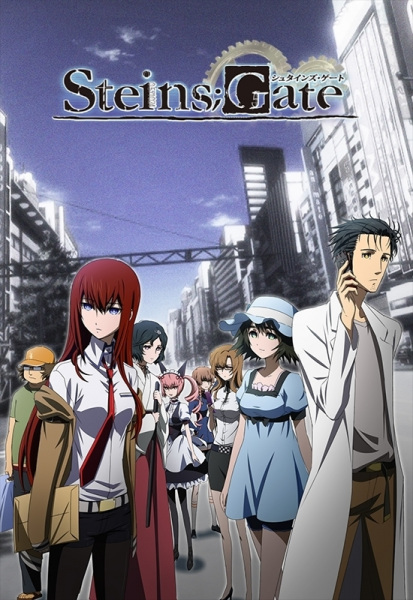
1. Steins;Gate (2011)
Steins;Gate is one of the best time travel stories ever told, in any medium. I am not ranking it first out of sentiment or genre loyalty — I am ranking it first because nothing else on this list achieves what it achieves emotionally while being as intellectually rigorous about its mechanics.
The first eight episodes are slow and deliberately strange. Rintaro Okabe is a self-proclaimed mad scientist running an underground research lab in a rented room above a TV repair shop. He and his friends accidentally invent the ability to send text messages to the past. They use this for small, self-interested reasons. They change trivial things. They feel clever about it.
Then something goes wrong and the second half of the series happens.
I will not say what goes wrong. What I will say is that the time travel mechanics in Steins;Gate are rigorous in a way that is unusual for the genre. The story does not cheat. Decisions have consequences that are tracked and remembered. When characters have to undo a change they made, they have to do it without creating new problems, and watching that process is agonizing in a specific way that requires you to have deeply invested in the people involved.
You will be deeply invested in the people involved. I promise.
Episodes: 24 + film + Steins;Gate 0 | Genre: Sci-Fi, Thriller, Romance
---
2. Psycho-Pass (2012–2013)
Psycho-Pass is set in a future Japan where a system called the Sibyl System continuously measures citizens' psychological states and predicts their likelihood of committing crimes. People with a high enough "Psycho-Pass" reading — a Criminal Coefficient — are detained or eliminated before they have done anything wrong.
Akane Tsunemori is a new detective entering this system. She starts to question whether the system is just.
The show is a philosophy lecture disguised as a tense thriller, and the disguise is very good. The central argument — about whether a system that prevents crime by predicting it is compatible with human freedom — is presented with genuine complexity. The antagonist, Shogo Makishima, is one of the great anime villains specifically because he is not entirely wrong in his diagnosis of the Sibyl System's problems. He is wrong about what to do about it. He is not wrong about what it is.
Season 1 is essential. Season 2 is weaker and can be skipped. The theatrical films add context.
Episodes: 22 (Season 1) | Genre: Sci-Fi, Psychological, Crime
---
3. Ghost in the Shell: Stand Alone Complex (2002)
Ghost in the Shell is the ancestor of virtually every good sci-fi anime made after 1995. The Stand Alone Complex television series is the most complete and accessible version of the world.
Major Motoko Kusanagi leads Section 9, a counter-terrorism unit in a future Japan where cybernetic augmentation is common enough to be routine. Her own body is almost entirely artificial. She retains her human brain, but even that boundary feels increasingly theoretical. The series asks, without melodrama, what identity means when the physical substrate of selfhood can be backed up, overwritten, or transferred.
Stand Alone Complex functions as a procedural crime drama with an overarching mystery — who is the Laughing Man, and what does the conspiracy around them reveal about the society Kusanagi is tasked with protecting? It is sophisticated, slow-burning, and becomes richer on second viewings when you can track the clues the show was leaving.
Episodes: 26 | Genre: Sci-Fi, Cyberpunk, Crime
---
4. Cowboy Bebop (1998)
Cowboy Bebop is the most stylish anime ever made. Spike Spiegel and his crew of bounty hunters travel the solar system in a beat-up ship called the Bebop, chasing criminals across planets and moons and mostly failing to catch them.
The sci-fi setting is secondary to the character work. What Cowboy Bebop does with its future solar system is use it as a canvas to tell deeply human stories about people who cannot leave the past behind. Spike is running from a history he has been trying to die from for years. Jet has regrets he never put down. Faye has a past she cannot remember. The Bebop is a ship of people stuck in amber, drifting through a solar system that has moved on without them.
At twenty-six episodes it is one of the tightest anime ever made. There is no padding, no filler, no wasted episode. Every installment either develops character or world or both. The music is exceptional. The ending is earned. Start it.
Episodes: 26 | Genre: Sci-Fi, Space Opera, Neo-Noir
---
5. Vivy: Fluorite Eye's Song (2021)
Vivy is an original anime — not adapted from any prior source — about an AI named Vivy, a singing robot at an amusement park who is approached by a future AI named Matsumoto. Matsumoto has come from a century ahead to enlist her help in preventing a catastrophic robot uprising by making small changes to events at key historical moments.
Each arc jumps forward in time, showing a different point in the slow deterioration of human-AI relations and Vivy's attempts to redirect the trajectory. The show is beautifully animated, the story is structured with unusual care, and it has genuine things to say about consciousness, purpose, and what it means for a being to want something.
It is also unexpectedly moving at the end. I was not prepared for that.
Episodes: 13 | Genre: Sci-Fi, Music, Action
---
6. Serial Experiments Lain (1998)
Serial Experiments Lain is not casual viewing. It is one of the most deliberately alienating and experimental anime ever made, and it is also one of the most prescient things produced in the 1990s about where technology was heading.
Lain is a quiet, strange teenage girl who begins receiving messages from a classmate who recently died. Her investigation leads her deeper into the Wired — a global network with similarities to the internet — and eventually into questions about whether her identity exists independently of the network at all, or whether the distinction between online and offline selfhood is meaningful.
This came out in 1998. It predicted social media, the dissolution of offline identity, and the way networked consciousness erodes the boundaries of the self better than almost any subsequent work of fiction. It is difficult to watch. It stays with you for years.
Episodes: 13 | Genre: Sci-Fi, Psychological, Mystery
---
7. No. 6 (2011)
No. 6 is a shorter and less well-known dystopia about a genetically engineered utopian city and what happens to the people it excludes. Shion is a privileged citizen who loses everything when he offers shelter to a fugitive from outside the city's walls.
The show does not fully succeed at everything it attempts, and the eleven-episode length forces it to rush certain developments. But its world-building is genuinely interesting and the relationship at its center is developed with unusual care for the format. Worth watching if you want something shorter and more intimate than the other entries on this list.
Episodes: 11 | Genre: Sci-Fi, Dystopia, Drama
---
8. Planetes (2003)
Planetes is the most grounded science fiction anime I know. It is set in 2075, when space debris from decades of satellite launches poses a genuine hazard to spacecraft. A team of workers employed to collect this debris — the lowest-status job in the space industry — deals with the daily reality of working in space while the rest of the solar system is being opened for commercial development.
The science is accurate. The human detail is exceptional. It is less about ideas than about what it feels like to be an ordinary person living in an extraordinary time, which is a perspective science fiction rarely explores with this much patience and affection.
Episodes: 26 | Genre: Sci-Fi, Drama, Slice of Life
---
Where to Start
Steins;Gate first. It is the most emotionally engaging entry on this list and the most accessible without prior science fiction anime knowledge. If you want something shorter, Vivy is thirteen episodes and stands completely alone. If you want the cyberpunk classics, Ghost in the Shell: Stand Alone Complex and then Cowboy Bebop.
Science fiction anime at its best does not just imagine futures. It uses imagined futures to ask questions about the present that are easier to examine at a distance. That is what this list is for.