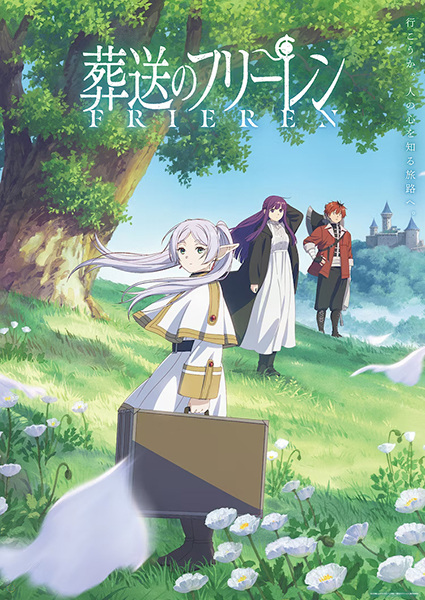

Most fantasy anime begin where Frieren ends. The demon king is defeated, the hero's party has saved the world, and the celebration is over. Frieren: Beyond Journey's End starts at the moment most stories would roll the credits — and then asks a question almost no fantasy story bothers to ask: what happens to the people who saved the world after the adventure is finished?
That single idea is the foundation of one of the most quietly extraordinary anime of recent years. Frieren won anime of the year awards, captivated millions of viewers who do not normally gravitate toward slow, contemplative shows, and earned a reputation as a modern classic almost immediately. After watching it, I understand exactly why. This is a special piece of work, and it deserves the praise.
The Premise That Changes Everything
Frieren is an elf, and elves live for thousands of years. She was part of the hero Himmel's party that defeated the Demon King after a ten-year journey. For Frieren, ten years is nothing — a brief moment in a life that stretches across millennia. So when the adventure ends and the party goes their separate ways, she treats it casually, planning to see her friends again sometime, as if a few decades is no time at all.
Then Himmel dies of old age. And Frieren, standing at his funeral, realizes she barely knew him. She spent ten years traveling beside this man and never bothered to learn who he really was, because to her it was a fleeting acquaintance. His death breaks something open in her. She begins a new journey — not to save the world this time, but to understand the people she traveled with, to learn what she failed to learn while they were alive, and to figure out what human connection means to someone who will outlive everyone she ever meets.
That is the whole show. It sounds quiet, and it is. But it is also one of the most emotionally devastating premises in any anime, because it is really about memory, mortality, and the way we fail to appreciate the people in front of us until they are gone.
Why the Slow Pace Works
Frieren is not a fast show. There are battles, and they are excellent, but the heart of the series is in small moments — a conversation, a memory, a flower that blooms, a place revisited decades later. The pacing is deliberate because the show's entire subject is the passage of time and how differently a long-lived elf experiences it compared to the humans around her.
This is a risky approach. Slow anime often lose viewers. Frieren succeeds because every quiet moment is doing emotional work. A scene where Frieren visits a town she passed through with Himmel fifty years earlier is not filler — it is the entire thesis of the show in miniature, the past pressing against the present, the dead remembered through the living. The slowness is not a flaw to tolerate. It is the point.
The Animation
Madhouse produced Frieren and the result is gorgeous. The animation is restrained rather than flashy for most of the runtime, which makes it all the more striking when the show decides to unleash a major action sequence. The fight scenes, when they come, are spectacular and tense, but they never overwhelm the show's gentle character. The art direction emphasizes natural beauty — landscapes, light, weather — in a way that reinforces the show's themes about time and the natural world continuing on regardless of human concerns.
The character animation is where Frieren truly shines. So much of the storytelling is in faces and small gestures, and the animators communicate enormous emotion through subtle expression. Frieren herself is largely impassive, and the show does extraordinary work showing the feeling beneath her calm exterior through the smallest changes in her face.
The Characters
Frieren picks up new companions on her journey. Fern is a young human mage raised by one of Frieren's old party members, practical and quietly devoted. Stark is a warrior with deep insecurities masked by reluctant courage. Together they form a new party, and watching Frieren slowly learn to connect with them — to do for them what she failed to do for Himmel — is the emotional spine of the series.
The genius of the show is that Himmel, despite being dead before the story properly begins, is its most important character. Through flashbacks, we come to know him as Frieren comes to understand him in retrospect, and his kindness and wisdom echo through every episode. By the end, you grieve a man you only ever saw in memories, which is a remarkable thing for a show to accomplish.
Is Frieren Worth Watching?
Yes, without reservation, with one caveat: it is not an action-first show, and if you need constant excitement and fast pacing, the deliberate rhythm may not suit you. But if you are open to a slower, deeper experience, Frieren is one of the most rewarding anime you can watch. It is emotionally rich, beautifully made, and built around an idea that lingers long after the final episode.
It is also a surprisingly accessible entry point for people who do not usually watch anime. The fantasy elements are gentle and easy to follow, the emotional themes are universal, and the storytelling is patient and clear. I have recommended it to people who have never watched anime in their lives, and several of them have called it one of the best things they have ever seen.
Where It Fits
Frieren belongs in the conversation with the very best fantasy anime ever made. It is not trying to be the biggest or the loudest. It is trying to say something true about time, loss, and the value of the people we travel beside, and it succeeds completely. In a medium full of spectacle, Frieren's quiet confidence is its greatest strength.