
Isekai — the genre where a character is transported to another world — has become the dominant force in anime over the last decade. There are hundreds of isekai anime. Most of them are not good. A handful are extraordinary.
This list ranks the best isekai anime by overall quality: story, characters, animation, and how well the show uses the isekai premise rather than just using it as an excuse to skip world-building.
I have watched every entry on this list multiple times. These are my honest rankings, not a popularity contest.
What Makes a Good Isekai
Before the list, a note on what separates good isekai from bad.
The worst isekai anime use the "transported to another world" premise as shorthand for skipping character development. The protagonist arrives, immediately discovers they are more powerful than everyone, and spends the rest of the series being admired. No conflict. No growth. No reason to care.
The best isekai use the premise for what it actually allows: a character placed in an unfamiliar world where their existing knowledge and personality are tested against new rules. The isekai itself becomes a tool for character exploration rather than a free pass to skip it.
With that standard in mind — here are the best.
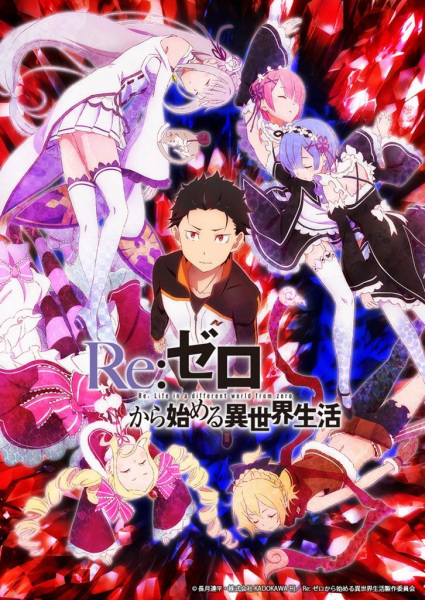
1. Re:ZERO — Starting Life in Another World (2016)
Re:ZERO is the isekai that proved the genre could be genuinely sophisticated. Subaru Natsuki is transported to a fantasy world and discovers he has one ability: when he dies, time resets to a specific checkpoint. He alone remembers what happened.
What the show does with this ability is extraordinary. Subaru fails. He fails badly, repeatedly, in ways that are genuinely distressing to watch. The show does not treat death as a cost-free reset button — it treats it as genuine trauma, accumulated across loops that only Subaru can remember. By the middle of the first season, Subaru is a psychologically damaged person trying to function in circumstances that have broken him multiple times.
The character writing in Re:ZERO is the best in isekai. Subaru's relationship with Emilia and Rem, the way those relationships are complicated by his repeated deaths, the moment in Episode 18 where he finally breaks down completely — these are things that comparable isekai anime never attempt.
Three seasons are available and the series is ongoing — each one raising the stakes in ways that feel earned. For the latest chapter of Subaru's journey, see what is happening in Re:Zero Season 4.
Rating: 9.2/10
2. Mushoku Tensei: Jobless Reincarnation (2021)
Mushoku Tensei is the most technically accomplished isekai anime produced and it redefined what the genre could look like visually. The protagonist is reincarnated as a baby in a fantasy world with all his previous memories intact and begins immediately pursuing mastery of magic.
The production quality is Studio Bind's defining work — fluid animation, careful attention to world detail, and action sequences that rival anything in the genre. The show's visual consistency across multiple seasons is exceptional.
Mushoku Tensei contains content in its early episodes that some viewers find deeply uncomfortable. The protagonist has serious character flaws that the show examines rather than ignores. This is a deliberate creative choice — the series is about redemption, and redemption requires depicting what needs to be redeemed. But it is important to be aware of going in.
For viewers comfortable with those elements: Mushoku Tensei is the most rewarding long-form isekai currently running. The world-building is meticulous, the power system is logical, and the character development over multiple seasons is among the best in the genre.
Rating: 9.0/10
3. That Time I Got Reincarnated as a Slime (2018)
Tensura is the warmest and most relaxed entry on this list. The main character is reincarnated as the weakest possible creature — a slime — and through a unique ability to absorb and replicate the attributes of anything he defeats, gradually becomes one of the most powerful beings in the world.
What distinguishes Tensura from typical power fantasy isekai is its emphasis on building rather than fighting. Rimuru doesn't just defeat enemies — he recruits them, integrates them into his growing city, and creates a civilization rather than just a power hierarchy. The show's warmth comes from watching that community grow.
Four seasons of Tensura are available. The quality is consistent across the run, and the later seasons expand the political and world-building dimensions in satisfying ways.
Rating: 8.2/10
4. Overlord (2015)
Overlord takes the isekai premise and inverts it completely. Rather than a weak protagonist who grows stronger, Ainz Ooal Gown arrives in his new world already at maximum power. He is an undead sorcerer with abilities that far exceed anything the new world has to offer.
The tension in Overlord is not "will Ainz win" — he always wins. The tension is "what will Ainz do with his victory, and what does absolute power reveal about a person." Ainz is not a hero. His goals are his own. The show spends significant time on the perspective of characters on the receiving end of his power, which gives the series a moral complexity most power fantasy isekai avoid.
Four seasons currently available, with Season 5 confirmed.
Rating: 8.0/10
5. The Rising of the Shield Hero (2019)
Shield Hero starts with one of the most effective setups in isekai: Naofumi is summoned to another world as one of four legendary heroes, immediately betrayed by the people who summoned him, and has to rebuild from absolute zero while everyone considers him a criminal.
The early arc of Shield Hero is compelling precisely because the injustice is real and the show doesn't soften it. Naofumi's gradual rebuilding — finding allies, developing his own approach to the hero system, proving his worth through results rather than status — is satisfying in a way that most isekai starting from a position of strength never manage.
Three seasons available. The quality drops somewhat in later seasons as the scale expands, but the first season is exceptional.
Rating: 7.8/10
6. No Game No Life (2014)
No Game No Life remains one of the most creative isekai anime despite having only one season after more than a decade. Two genius siblings are transported to a world where all conflict is resolved through games. They are unbeatable.
The show's appeal is its battle system — each game-based conflict requires the protagonists to identify a hidden manipulation by the opponent and create a counter-exploit within the rules. The creativity of these sequences is unmatched in the genre. No Game No Life at its best feels like watching a magic trick being deconstructed and reconstructed in real time.
One season (12 episodes) plus a film that serves as a prequel. Season 2 has been rumored for years with no announcement.
Rating: 7.9/10
7. KonoSuba: God's Blessing on this Wonderful World (2016)
KonoSuba is the isekai comedy that parodies the genre's tropes while being a genuinely good show in its own right. Kazuma is transported to a fantasy world and forms a party with possibly the most dysfunctional group of companions in anime: a useless goddess, an explosion-obsessed mage who can only cast one spell per day, and a masochistic crusader in heavy armor who can't hit anything.
The show is laugh-out-loud funny in a way that anime comedy rarely manages. But what elevates it beyond parody is that the characters are genuinely well-written — their flaws are consistent, their relationships are real, and the show finds warmth in their disasters.
Three seasons plus a film. A spinoff series focusing on one of the main characters is also available.
Rating: 8.1/10
8. Sword Art Online: Alicization (2018)
SAO's third season — Alicization — is worth separating from the earlier seasons in any serious discussion of the franchise. Where the first two seasons are competent but flawed, Alicization is genuinely ambitious.
Kirito is trapped in a virtual world that operates by fundamentally different rules from previous games in the series. The arc's exploration of artificial consciousness, the nature of identity, and what it means to have a "soul" gives Alicization a philosophical depth unusual for the franchise. The production quality, particularly in the climactic battles of the War of Underworld arc, is exceptional.
If you bounced off SAO Season 1, Alicization is worth a separate evaluation. It is a substantially different production.
Rating: 7.7/10
The One to Start With
If you have never watched isekai and want a single entry point: Re:ZERO. It is the most emotionally engaging, the most character-focused, and the most willing to challenge both its protagonist and its viewer.
If you want something lighter for casual watching: KonoSuba or Tensura.
If you want the highest production quality: Mushoku Tensei, with the content caveat noted above.
All eight shows on this list are worth your time. The isekai genre has a reputation for low quality that these series have spent years disproving.