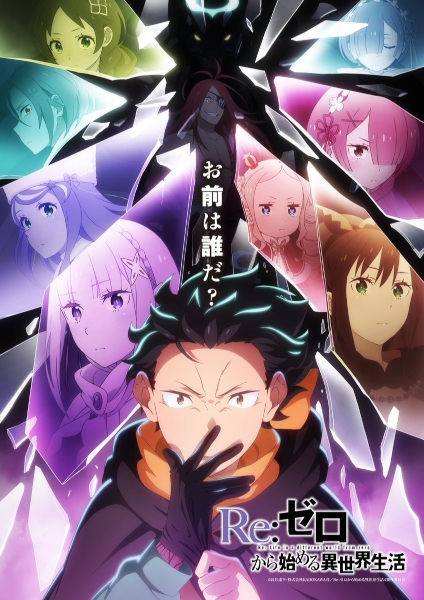

Re:Zero — Starting Life in Another World has spent the better part of a decade quietly proving that it is one of the smartest, cruelest, and most emotionally ambitious isekai series ever made. With Season 4 now airing, Subaru Natsuki's journey is reaching some of its most demanding material yet, and longtime fans are once again strapping in for the psychological punishment that only this show delivers so well.
Here is what Season 4 is about, why Re:Zero stands so far apart from the isekai crowd, and how to catch up if you have fallen behind.
A quick refresher on what Re:Zero is
Re:Zero is based on the light novel series by Tappei Nagatsuki and is animated by the studio White Fox. Its premise sounds like every other isekai on the shelf: an ordinary young man, Subaru Natsuki, is suddenly transported from modern Japan to a fantasy world. But the show immediately twists the formula into something far more punishing.
Subaru's only power is Return by Death. When he dies, he wakes up at an earlier point in time, keeping all his memories while everyone else forgets what happened. He cannot tell anyone about this ability — if he tries, a horrifying force begins to crush his heart and the person he is speaking to. So Subaru is forced to relive his worst moments over and over, dying again and again, carrying trauma that nobody else can even know about.
This is the engine that makes Re:Zero special. It is not a power fantasy. It is a story about a deeply flawed person being broken down and rebuilt by suffering, and slowly — painfully — becoming someone better.
Why Re:Zero is not your typical isekai
Most isekai protagonists are competent from the start. They get a cheat skill, build a harem, and win. Subaru is the opposite. Early in the series he is annoying, cowardly, and arrogant, convinced that being the protagonist of his own story entitles him to rewards he has not earned. The show is acutely aware of this, and it spends seasons systematically dismantling his ego.
The most famous example is the long, devastating sequence in the first season where Subaru completely falls apart — a raw, uncomfortable portrayal of someone hitting absolute rock bottom. It is one of the most honest depictions of despair in any anime, and it is the moment a lot of viewers realized this show was operating on a different level.
By the time you reach the later seasons, Subaru has grown into someone genuinely admirable, but he never stops being human. He still panics, still fails, still has to die repeatedly to inch toward a solution. The growth feels earned because the cost is always shown.
The heart of the series: Emilia, Rem, and the cast
Re:Zero's emotional weight comes from its characters. Emilia, the silver-haired half-elf Subaru first protects, is the person he is ultimately fighting for. Their relationship is built slowly and honestly rather than handed to him as a reward. Rem, the blue-haired maid whose devotion to Subaru produced some of the most beloved moments in the series, remains one of anime's most adored characters for good reason.
The supporting cast — Beatrice, Roswaal, the various Witches and Sin Archbishops — gives the world depth and danger. The antagonists in particular are some of the most memorable in modern anime, each embodying a twisted philosophy that forces Subaru to confront his own values.
What is happening in Season 4
Season 4 continues Subaru's journey into the next major stretch of the story, raising the stakes both in scale and in psychology. Without spoiling specifics for newcomers, the series at this point has moved well past simple survival. Subaru is no longer just trying to live through the day — he is navigating layered conspiracies, new and dangerous locations, and threats that test not only his resolve but the bonds he has spent seasons building.
A recurring thread running underneath everything is the lingering cost of earlier arcs. Re:Zero rarely lets its victories be clean. The emotional debts Subaru has accumulated — the people he could not save, the connections that were damaged, the parts of himself he had to give up — continue to shape the story. Season 4 leans into that accumulated history, which is exactly why long-term fans find it so rewarding. This is a series that remembers everything and makes it matter.
The production by White Fox continues to deliver the moody atmosphere and tense, dialogue-driven confrontations that define the show. Re:Zero has never been about flashy fight choreography. Its set pieces are psychological — conversations that feel like battles, where a single wrong word can unravel everything Subaru has worked toward.
How to catch up before or during Season 4
If you have never watched Re:Zero or you have fallen behind, here is the good news: the entire series is available to stream, and the watch order is straightforward.
Start with Season 1, ideally the Director's Cut version if you can find it, which re-edits the early material into a tighter experience. Then move through Season 2 and Season 3 in order. There are also a couple of well-regarded OVA films that expand on the world and characters, but they are supplementary rather than essential for following the main plot.
Do not skip ahead. Re:Zero is a series where the emotional payoffs depend entirely on having lived through the earlier suffering with Subaru. Watching a later season cold would rob you of the context that makes those moments land. The investment is significant, but few series reward patience as completely as this one does.
Why Season 4 matters for the genre
Isekai has become one of anime's most crowded genres, and a lot of it is interchangeable. Re:Zero matters because it keeps proving that the genre can carry real psychological and emotional weight when a creator is willing to be cruel to the protagonist and honest about consequences. Every new season is a reminder that isekai does not have to be a wish-fulfillment treadmill.
For fans who came up on the show, Season 4 is the continuation of a years-long relationship with a character they have watched suffer, grow, and endure. For newcomers willing to start from the beginning, it is a chance to see why people still talk about Re:Zero as the gold standard of dark isekai — and why it tops our ranking of the best isekai anime of all time.
Return by Death as a storytelling engine
Return by Death is more than a gimmick — it is the foundation of everything that makes Re:Zero work. Most time-loop stories use the mechanic for comedy or light puzzle-solving. Re:Zero uses it as a source of genuine horror. Every reset means Subaru has to die, often violently, and watch people he loves die too. He cannot share the burden because the curse silences him. The result is a hero carrying invisible trauma that no one around him can understand.
This is what elevates the series above its peers. The loop is not a cheat code; it is a punishment. Subaru's victories are paid for in repeated death and accumulated grief, and the show never lets you forget the cost. It also creates an unusual kind of tension — because death is not the end for Subaru, the real stakes become emotional and psychological rather than physical. Watching him try to hold himself together across loop after loop is far more gripping than any standard fight scene.
The villains and their twisted philosophies
Re:Zero has some of the best antagonists in modern anime, and Season 4 continues that tradition. The series' villains are rarely evil for its own sake. Each embodies a philosophy — a way of seeing love, justice, or indulgence taken to a horrifying extreme. They are charismatic, unpredictable, and genuinely frightening, and they force Subaru to define what he actually believes by confronting people who believe the opposite with total conviction.
This is part of why the series rewards long-term investment. The conflicts are not just about who is stronger; they are about clashing worldviews. The best confrontations in Re:Zero are conversations, where the danger comes from ideas as much as weapons. That makes the antagonists linger in your memory long after their arcs end.
Why Re:Zero's pacing divides people
It is worth being honest: Re:Zero is not for everyone, and its pacing is the main reason. The series takes its time. Conversations run long, Subaru's internal spirals are dwelt on, and arcs unfold slowly and deliberately. Viewers who want fast, punchy episodic action sometimes bounce off it.
But for those who sync with its rhythm, that patience is the point. The slow build is what makes the payoffs hit so hard. When a long-simmering arc finally resolves, the relief and catharsis are enormous precisely because you suffered through every setback alongside Subaru. Season 4 continues this approach, and newcomers should go in expecting a deliberate, emotionally heavy experience rather than a breezy adventure. The reward for that patience is some of the most powerful storytelling the genre has to offer.
Rem, Emilia, and the fandom's heart
No discussion of Re:Zero is complete without acknowledging how deeply fans care about its characters, particularly its two central heroines. Emilia is the person Subaru is ultimately fighting for, and her arc — from a feared, isolated half-elf to someone learning to trust and to lead — runs quietly underneath the entire series. Her relationship with Subaru is built on mutual growth rather than convenient attraction, which is part of why it feels earned.
Rem, meanwhile, became a cultural phenomenon in her own right. Her devotion to Subaru, expressed in one of the most famous speeches in modern anime, turned her into one of the most beloved characters the medium has ever produced. The emotional thread surrounding her — and the lingering consequences of earlier arcs that left her story unresolved for so long — remains one of the most discussed elements among fans, and it gives the later seasons an undercurrent of longing that the show uses to great effect.
This intense attachment is a sign of how well Re:Zero writes its cast. These are not interchangeable archetypes designed to fill roles. They are specific, flawed, memorable people whose fates genuinely matter to the audience. Season 4 leans on that investment, trusting that viewers care enough about these characters to feel every threat against them. That trust is well placed, and it is a large part of why the series commands such loyalty years after it began. When a show can make you ache over the fate of a side character, it has done something most stories never manage.
Final thoughts
Re:Zero Season 4 is more of what makes the series great: a flawed hero forced to earn every inch of progress through repeated failure, a cast worth caring about, and a story that refuses to take the easy way out. It is not a comfortable watch, and it is not meant to be. That discomfort is the point.
If you are already a fan, you know exactly why you are here. If you are new, do yourself a favor and start from Season 1 — then come back and watch Subaru face his hardest trials yet. Few anime make suffering feel this meaningful.