
The Fate franchise has a reputation as the most confusing watch order in anime, and honestly, the reputation is earned. There are multiple adaptations of the same story, prequels released before the things they precede, a mobile game with its own anime continuity, and a magical girl spin-off that is somehow canon-adjacent. People bounce off Fate not because it is bad — at its best it is spectacular — but because they start in the wrong place.
I have watched essentially all of it, so here is the guide I give friends: what the franchise actually is, the exact order to watch it in, and which side entries deserve your time.
What Fate Actually Is
At its core, Fate is about the Holy Grail War: a secret battle royale where seven mages each summon a legendary hero from history or myth — King Arthur, Alexander the Great, Gilgamesh, Heracles — as their Servant, and the last team standing wins a wish-granting device. The premise came from the 2004 visual novel Fate/stay night, which had three separate story routes, each following the same war down a different path with a different heroine.
That three-route structure is why the anime situation is confusing: the routes were adapted separately, years apart, by different studios. You are not watching sequels — you are watching parallel versions of the same war that reveal different truths.
The Recommended Watch Order
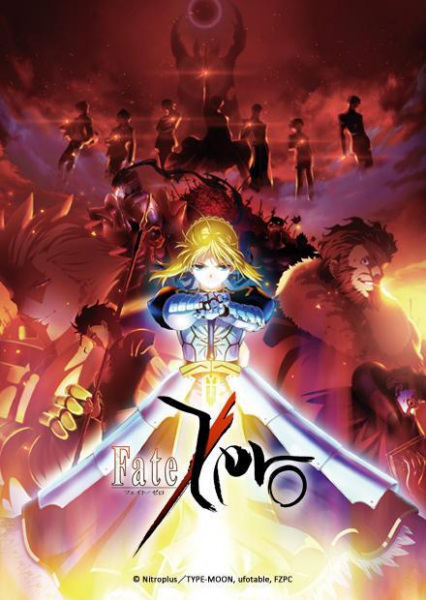
Step 1: Fate/Zero (2011-2012, 25 episodes). The prequel, adapting Gen Urobuchi's novels about the previous Grail War, ten years before stay night. This is the franchise's best-written entry — a genuinely dark ensemble war story about broken idealism, anchored by Kiritsugu Emiya, the mage-killer who wants to save the world and destroys everything he loves trying. Ufotable's production still holds up beautifully. Yes, it spoils a few stay night reveals; in exchange it makes everything after hit harder, and it is the strongest first impression the franchise can make.
Step 2: Fate/stay night: Unlimited Blade Works (2014-2015, 26 episodes). Ufotable's adaptation of the second visual novel route. This is the main course: Shirou Emiya, Kiritsugu's adopted son, stumbles into the next Grail War alongside the Servant Saber and the mage Rin Tohsaka. UBW is the route about ideals — whether Shirou's borrowed dream of saving everyone is beautiful or a lie — and it contains some of ufotable's most dazzling fight production.
Step 3: Fate/stay night: Heaven's Feel film trilogy (2017-2020). The third route, adapted as three theatrical films, and the franchise's emotional endgame. Heaven's Feel tears down everything the previous routes built, centering Sakura Matou, the girl the other routes quietly walked past. It is the darkest, most beautiful material in Fate, and the third film is a genuine cinematic achievement. Do not start here — its whole power comes from subverting what you already know.
Skip: the 2006 Studio Deen Fate/stay night series (superseded and rough), and know that the first route, Fate proper, has never received a modern full adaptation — UBW and Heaven's Feel cover what matters.
Which Spin-offs Are Worth It
- ›Fate/Apocrypha — an alternate-timeline war with fourteen Servants. Messy but fun, with one all-time episode of sakura-storm animation. Optional.
- ›Fate/Grand Order: Babylonia — adaptation of the mobile game's best chapter. Gorgeous production and a great Gilgamesh, watchable after the main three entries.
- ›Lord El-Melloi II's Case Files — a mystery series starring a grown-up Fate/Zero survivor. Quietly excellent for Zero fans.
- ›Fate/kaleid liner Prisma Illya — magical girl alternate universe. Only for the deeply invested.
- ›Carnival Phantasm — the official gag series. Watch after everything; it is a love letter to fans.
The golden rule: main trilogy first (Zero, UBW, Heaven's Feel), then branch wherever curiosity takes you.
The Mistakes Everyone Makes
Having walked several friends through this franchise, the same three mistakes come up every time. First: starting with whatever Fate title appears first alphabetically on a streaming app — that is how people end up watching Fate/Apocrypha with zero context and concluding the franchise is incomprehensible. Second: watching the 2006 Deen adaptation because it is labeled simply "Fate/stay night" and looks like the obvious starting point. It is the oldest, weakest version of the story, and it has soured more potential fans than everything else combined. Third: treating Fate/Grand Order content as the main series because it has the most entries. FGO is a parallel universe built for mobile-game players; wandering into it early is like starting Star Wars with a holiday special. Follow the trilogy order above and the franchise goes from infamous to genuinely one of anime's best dark fantasy sagas.