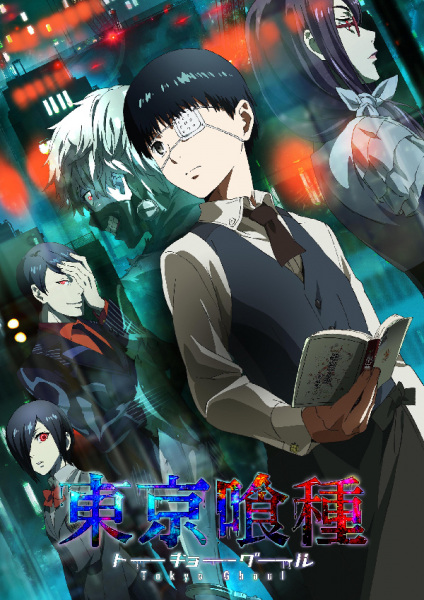

Tokyo Ghoul is one of the most beloved dark anime of the 2010s — and also one of the most argued-about, because its later seasons diverge from the manga in ways that split the fanbase hard. If you are starting the series, you need to know the correct watch order and, more importantly, the honest truth about where the anime succeeds and where you might want to switch to the manga. This guide covers both.
Minor spoilers about the show's structure follow, but nothing that ruins the story.
The Correct Anime Watch Order
Here is the order to watch the Tokyo Ghoul anime:
1. Tokyo Ghoul (Season 1, 2014) — 12 episodes. The original, and the best. It follows Ken Kaneki, an ordinary college student who becomes a half-ghoul after a date goes horrifyingly wrong, and must navigate a hidden world of flesh-eating ghouls while clinging to his humanity. This season is a genuine masterpiece of body horror and tragedy.
2. Tokyo Ghoul √A (Root A, Season 2, 2015) — 12 episodes. Here is where controversy begins. Root A is an anime-original continuation that diverges significantly from the manga, following Kaneki down a different path than the source material. Some fans appreciate it; many feel it rushed and mishandled key material.
3. Tokyo Ghoul:re (Season 3, 2018) — 12 episodes. Adapts the sequel manga, set some time after the events of the original, with a new protagonist and organization at the center. It is heavily condensed.
4. Tokyo Ghoul:re (Season 4 / 2nd Season, 2018) — 12 episodes. Concludes the anime adaptation of the :re manga, bringing the overall story to its end.
There are also a couple of OVAs (Jack and Pinto) that are side stories — optional, and best watched after Season 1 if you want them.
The Honest Manga Debate
Now the part every Tokyo Ghoul veteran will tell you: the anime's first season is excellent, but the later seasons are widely considered a significant downgrade from the manga. Starting with Root A, the anime made structural choices and heavy cuts that many fans feel damaged the story, and the :re seasons compressed an enormous amount of manga material into far too few episodes, leaving them confusing and rushed for viewers.
The common recommendation among fans is: watch Season 1 of the anime, then switch to the manga for Root A onward. The manga tells the complete, uncompressed story as author Sui Ishida intended, and it is genuinely one of the best dark manga of its era. The anime's first season is a great adaptation; the rest is a cautionary tale about cramming too much story into too little runtime.
That said, if you strongly prefer anime and do not want to read, watching all four seasons still gives you the broad strokes of the story — just know going in that the later seasons are messier and more divisive, and that the manga is the definitive version.
Where to Start and What to Expect
Tokyo Ghoul Season 1 is essential dark anime — a tragic, beautiful, brutal exploration of what it means to lose your humanity and fight to keep it. Its themes of identity, belonging, and the violence we are capable of are handled with real weight, and Kaneki's transformation is one of anime's great character arcs. The show is graphic and emotionally heavy, so it is aimed at mature viewers.
Go in for that first season expecting a masterpiece. Then decide, based on how invested you are, whether to continue with the anime for convenience or switch to the manga for the definitive experience. Either way, that first season alone earns Tokyo Ghoul its place among the essential dark anime.
The Legacy of Tokyo Ghoul
Whatever you think of its later seasons, Tokyo Ghoul's influence on modern dark anime is undeniable. Its first season arrived at a moment when the genre was hungry for something that took horror and tragedy seriously, and Kaneki's transformation became a template — the ordinary person forced into a monstrous world, losing pieces of their humanity with every step. You can see its fingerprints on the wave of dark, body-horror-tinged action anime that followed, and its iconic imagery (the mask, the kagune, the white hair) remains instantly recognizable even to people who never finished the series.
The show also became a cultural touchstone for a generation of fans, many of whom cite it as the anime that pulled them into darker, more mature storytelling after growing up on lighter shonen. Its opening theme, "Unravel," transcended the show entirely to become one of the most beloved anime songs ever recorded, still racking up streams from people who have never watched a single episode. That kind of cultural staying power is rare, and it speaks to how hard that first season hit.
So even with the caveats about its uneven adaptation, Tokyo Ghoul earns its place in the dark-anime canon. Watch that first season for the masterpiece it is, decide whether to continue with the anime or switch to the manga based on your own preferences, and appreciate why this series left such a deep mark on the medium. Few shows are simultaneously this flawed and this influential — and that contradiction is part of what makes Tokyo Ghoul worth experiencing for yourself.