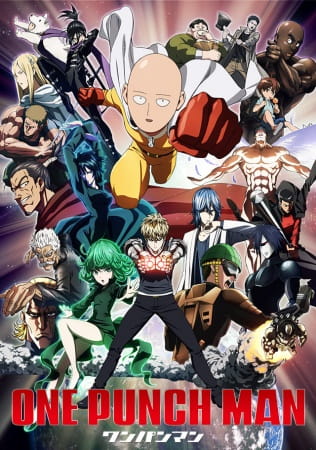
One Punch Man Season 3 was the most anticipated and most feared anime season in recent memory, and after sitting with the whole thing, I understand both reactions completely. The story it adapts is the best material the franchise has ever produced. The production that delivers it is, to put it kindly, uneven. Whether the season works for you depends entirely on which of those two things you weight more heavily.
I have been reading the One Punch Man manga for years, so I went in knowing exactly what this season needed to accomplish. The Monster Association arc is where ONE and Murata stop telling a gag story about an invincible hero and start telling a genuinely great action epic about everyone around him. Season 3 had to carry that shift. It mostly does — on the page. On the screen is a different conversation.
Where Season 3 Picks Up
The season continues directly from Season 2's cliffhanger. Garou, the self-proclaimed Hero Hunter, has been taken by the Monster Association, and the Hero Association is preparing a full-scale raid on their underground headquarters to rescue the kidnapped child Waganma. Every S-Class hero gets deployed. What follows is essentially one enormous, sprawling battle arc — hero versus monster matchups stacked on top of each other, each one escalating the stakes.
If that sounds like wall-to-wall action, it is. This arc is the closest One Punch Man ever gets to a war story, and the structure gives nearly every S-Class hero a real showcase. Zombieman, Atomic Samurai, Child Emperor, and Flashy Flash all get defining moments here. For fans who always wanted the supporting cast to matter, this is the season that delivers it.
Garou Is the Reason to Watch
Saitama is the face of the franchise, but Garou is its soul, and Season 3 is his season. His entire arc — a martial artist who idolized monsters because he grew up watching heroes bully the weak — comes to a head here. The show keeps asking the question that has always been underneath One Punch Man: what actually makes someone a hero, and what happens to the people the hero system fails?
Garou's fights are the best-written material in the season. He grows mid-battle, adapts to opponents in real time, and walks the line between monster and human in a way that makes every encounter feel morally loaded. When the season is locked in on him, it is as good as this franchise has ever been.
The Production Problem
Now the hard part. Season 1 of One Punch Man, produced by Madhouse under director Shingo Natsume, was a once-in-a-decade animation showcase — a passion project stacked with elite freelance animators. Season 2 moved to J.C. Staff and dropped noticeably. Season 3, also at J.C. Staff, sits closer to Season 2 than Season 1, and for an arc that is almost entirely fighting, that hurts.
There are strong episodes. A handful of sequences clearly received the veteran animator treatment and look legitimately great. But the baseline is inconsistent — stiff movement in crowd shots, noticeable still frames during what should be kinetic exchanges, and pacing that stretches material further than it should go. The manga's Murata draws some of the most dynamic action panels in the industry, which makes the comparison crueler than it would be for most adaptations.
My honest take: if you have never read the manga, the season is watchable and often exciting, because the underlying story is that strong. If you have read the manga, you will spend some episodes mourning what a top-tier studio might have done with this material.
What Still Works
The voice cast remains excellent. Makoto Furukawa's deadpan Saitama and Hikaru Midorikawa's increasingly unhinged Garou carry enormous amounts of the season. The soundtrack does its job, the comedy still lands — Saitama's complete detachment from the apocalyptic stakes around him remains the show's best running joke — and the adaptation makes smart cuts that keep the sprawling raid readable.
And the ending stretch of the arc, without spoiling it, contains some of the most thematically satisfying material One Punch Man has ever done. The final confrontation is not really about who punches harder. It is about what Saitama's existence means to someone who wanted to become a monster. That idea survives the production issues intact, and it is the reason I still recommend the season.
Verdict
One Punch Man Season 3 is a great story wearing a mid-budget coat. I scored it as an adaptation doing justice to the plot and characters while falling short of the visual bar this franchise set for itself in 2015. If you can make peace with that, there is a genuinely excellent arc here — the best writing in the series, a career-defining villain, and an ending that recontextualizes the entire premise.
Score: 7.5/10 — essential viewing for fans of the story, with expectations managed on the animation front.