
Studio Ghibli is the reason I started taking animation seriously. Before Ghibli, I thought of animated films as children's entertainment. After watching Grave of the Fireflies for the first time — an experience I can only describe as being emotionally destroyed in a completely worthwhile way — I understood that animation was simply a medium, and that a medium could do anything.
I have watched every Ghibli film. Some of them multiple times. Here is my honest ranking of all of them.
S Tier — All-Time Masterpieces
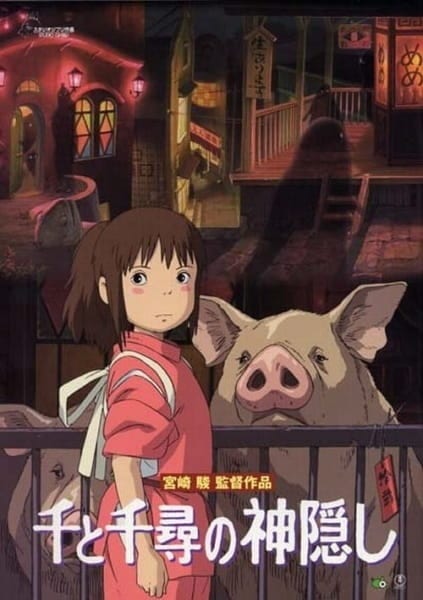
1. Spirited Away (2001)
The greatest animated film ever made and I will argue this with anyone. Ten-year-old Chihiro's parents are transformed into pigs at a spirit world theme park and she must work in the bathhouse to earn enough to free them. That synopsis barely communicates what the film is — a complete, living, breathing world that operates on dream logic in a way that feels completely natural.
Every character in this film, including the ones who appear for thirty seconds in a crowd scene, has a distinct design and implied story. The Radish Spirit. No-Face. The river god. Lin. Yubaba and Zeniba. All of them fully realized.
I have watched this film probably six times and noticed something new each time. That is the mark of something exceptional.
Director: Hayao Miyazaki | Score: 8.75/10
2. Princess Mononoke (1997)
If Spirited Away is Miyazaki's most enchanting film, Princess Mononoke is his most serious. It is the only Ghibli film where the moral complexity is unresolved on purpose — where both sides are right and both sides are wrong and you leave the film sitting with the weight of that ambiguity.
Lady Eboshi provides shelter and purpose to society's rejected — lepers and sex workers. She is also destroying an ancient forest. San, raised by wolves, fights to protect the natural world. She is also savage and incapable of compassion toward humans. Neither of them is the villain. Neither of them is the hero.
Miyazaki made this film to say something honest about the relationship between human civilization and the natural world. Over twenty years later, it hits harder than ever.
Score: 8.68/10
3. Grave of the Fireflies (1988)
I will say again what I said in my anime films list: I have only watched this film once and I cannot watch it again. That is the highest compliment I know how to give.
Two children trying to survive after the firebombing of Kobe. Directed by Isao Takahata with total emotional honesty. The film begins by showing you the ending. Everything that follows is the long, aching process of understanding how it got there.
Roger Ebert called it one of the greatest war films ever made. I agree with him. It belongs with Come and See and Apocalypse Now in the canon of cinema that genuinely communicates the cost of war.
Score: 8.44/10 | Director: Isao Takahata
A Tier — Exceptional
4. Nausicaä of the Valley of the Wind (1984)
Technically made before Studio Ghibli was officially founded, but considered part of the Ghibli canon and available in their library. A princess navigates a post-apocalyptic world overrun by giant insects and toxic jungle, caught between militaristic nations fighting over resources.
Nausicaä is one of Miyazaki's greatest creations as a character. She is curious, brave, and genuinely empathetic toward creatures that horrify everyone around her. The film created the template — heroic girl protagonist, environmentalist themes, moral complexity — that most Ghibli films since have followed.
5. Howl's Moving Castle (2004)
Miyazaki's most romantic film. A young woman named Sophie is cursed by a jealous witch to appear as an old woman and seeks help from the wizard Howl, who lives in a magnificent walking castle.
The film is looser and more dreamlike than most Ghibli works — the plot is secondary to the atmosphere and characters. Sophie and Howl's developing relationship is warm and genuine. The flying sequences are beautiful. The castle itself is one of the most charming creations in animation.
Score: 8.67/10
6. My Neighbor Totoro (1988)
The purest distillation of joy in Ghibli's catalog. Two sisters explore the countryside around their new home and encounter Totoro — a massive, gentle forest spirit. Nothing bad really happens in this film. It is entirely about wonder and childhood and the feeling of encountering something magical.
Totoro is the most iconic Ghibli creation. His design is perfect. His presence in the film is perfectly deployed. Watching children interact with him produces something that I can only describe as the feeling of a specific kind of happiness you had as a child and mostly cannot access anymore.
Score: 8.17/10
7. The Wind Rises (2013)
Miyazaki's semi-retirement film (before he made The Boy and the Heron and ended that retirement). A fictionalized biography of Jiro Horikoshi, the engineer who designed Japan's Zero fighter plane.
This is Ghibli's quietest and most introspective film. It is about the tragedy of pure creative passion in a world that uses it for war. Jiro loves beautiful planes. The beautiful planes he designs kill people. He knows this. He cannot stop.
The animation of the aircraft is extraordinary. The love story is delicate and heartbreaking. The overall tone is melancholic and adult in a way that most Ghibli films are not.
Score: 8.07/10
8. Only Yesterday (1991)
Isao Takahata's most personal film. A 27-year-old office worker visits the countryside and finds herself looking back on her childhood. No magic. No fantasy. Just memory and longing and the question of who you meant to become.
This is the Ghibli film I recommend to adults who find the fantasy elements of most Ghibli films off-putting. It is completely realistic and completely devastating.
Score: 8.29/10
9. The Tale of Princess Kaguya (2013)
Based on Japan's oldest folktale, produced in a loose watercolor sketch style by Isao Takahata that is unlike anything else in animation. A tiny girl found inside a bamboo shoot grows into a princess whose extraordinary beauty attracts the attention of suitors and eventually the Emperor of Japan.
The film is about what women are allowed to want. About the gap between the life you are given and the life you would have chosen. One of the saddest films in the Ghibli catalog and one of the most visually distinctive.
Score: 8.32/10
B Tier — Very Good
10. Kiki's Delivery Service (1989)
A thirteen-year-old witch leaves home to begin her year of independent training in a new city. She starts a delivery service using her broomstick. She loses her powers. She has to find them again.
Kiki's Delivery Service is about creative blocks and the anxiety of being young and trying to figure out where you fit. It is gentle and warm and Miyazaki at his most accessible.
Score: 8.04/10
11. Porco Rosso (1992)
A World War I flying ace has been transformed into a pig. He lives as an air pirate bounty hunter in the Adriatic. Miyazaki's most personal film — it is autobiographical in ways he has discussed openly. Both a children's adventure and a meditation on honour, war, and self-imposed exile.
Funny, melancholic, beautiful. Underrated in Ghibli's catalog.
Score: 7.92/10
12. Castle in the Sky (1986)
The first officially produced Ghibli film. A boy and girl race against pirates and government agents to find the legendary floating castle of Laputa. Pure adventure. The template for every Ghibli action film. Still enormously fun.
13. The Boy and the Heron (2023)
Miyazaki's return from retirement and winner of the 2024 Academy Award for Best Animated Feature. A boy follows a mysterious heron into another world searching for his deceased mother.
Dense with personal symbolism and more difficult to access than most Ghibli films. I did not fully understand it on first watch. On second watch, I found it deeply moving. It rewards patience.
Score: 7.87/10
C Tier — Good, Lesser Ghibli
Whisper of the Heart (1995) — Sweet, realistic romance about a bookish girl. Not directed by Miyazaki but carries his warmth.
Arrietty (2010) — Based on The Borrowers. Beautiful and peaceful if slight.
The Cat Returns (2002) — Lightweight fantasy spinoff. Fun but minor.
Pom Poko (1994) — Tanuki using shapeshifting to fight suburban development. Strange, sad, funny.
Final Thoughts
Even the weakest Ghibli film is better than most animated films ever made. The studio has produced nothing that I would call bad and several things I would call perfect. Start anywhere in the S or A tier. Work your way through the catalog. Every film is worth your time.