
Every few months someone asks me where to start with anime movies and I realize the question is harder to answer than it looks. There are the obvious Ghibli films that everyone knows. Then there are the films that serious anime fans consider the real masterpieces, which overlap only partially. And then there are the hidden gems that you find after years of watching, the ones that hit harder than anything more famous.
I have watched several hundred anime films over the past decade. This is the list I actually give people when they ask me what to watch. It's not comprehensive — it's curated. Every film here is one I would sit down and watch again right now.
Films That Belong in Any Conversation About Great Cinema
These don't need the qualifier "for anime" or "for animation." They are great films, full stop.
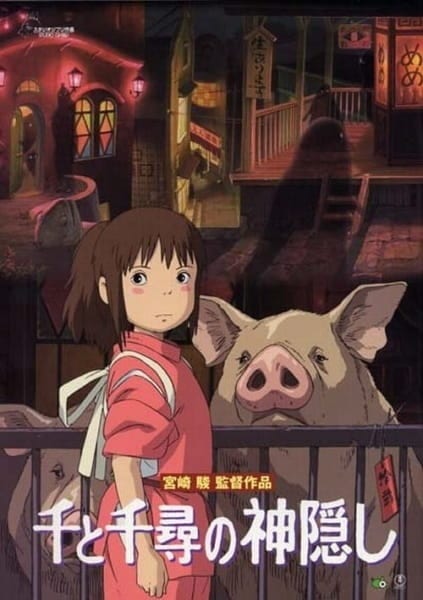
1. Spirited Away (2001) — Hayao Miyazaki
Spirited Away is the most awarded anime film in history: Oscar for Best Animated Feature, multiple awards at the Berlin Film Festival, and a position on virtually every "greatest films of all time" list. It held the record for highest-grossing Japanese film until Demon Slayer's Mugen Train film overtook it in 2020.
The story is ostensibly about a ten-year-old girl whose parents are transformed into pigs and who has to work in a spirit bathhouse to free them. But Spirited Away is really about the experience of childhood: the terror of adult spaces you don't understand, the strange resources you discover in yourself when you have no choice but to keep going, and the way the world keeps being strange and beautiful even when it frightens you.
Watch this first if you've never seen a Miyazaki film. Watch it again after you have.
2. Grave of the Fireflies (1988) — Isao Takahata
A warning before this one: Grave of the Fireflies is the saddest film I have ever watched. Not the saddest anime — the saddest film, in any medium, that I have personally experienced.
It follows two children in the final months of World War II Japan: a teenage boy and his four-year-old sister, orphaned and trying to survive on their own. The film tells you in its first minute how the story ends. The entire experience is watching how it gets there.
Isao Takahata made this film as a direct counter to what he saw as war nostalgia in Japanese popular culture. It is not entertaining. It is one of the most important pieces of animation ever made. There is a reason Roger Ebert wrote about it the way he did.
Do not watch this when you're already sad. Do watch it at some point.
3. Princess Mononoke (1997) — Hayao Miyazaki
Princess Mononoke is Miyazaki's most complex film and, depending on who you ask, his best.
A young prince is cursed by a demon and travels west to find its source. He arrives at a mining settlement at war with the forest gods who want it destroyed. The film refuses to assign blame simply: the humans mining the iron need it to survive, the forest gods need the forest to survive, and the protagonist is the only person trying to see all sides at once.
There are no villains in Princess Mononoke. There are only people with legitimate needs that happen to be incompatible. This is rarer in storytelling than it sounds, and Miyazaki pulls it off in a film that also has some of the most spectacular action sequences he ever directed.
4. Akira (1988) — Katsuhiro Otomo
Akira changed what animation was understood to be capable of. It was made in 1988, three years before the Berlin Wall came down, and it imagined a post-nuclear Tokyo in 2019 that — watching it now — feels more prescient than any science fiction film I know.
The animation is hand-drawn at 24 frames per second, which was virtually unheard of at the time, and it shows: the film looks better than most animation made today. The motorcycle chase alone has been studied in film schools for its understanding of motion.
The story — a teenage biker is caught up in a government conspiracy involving psychic experiments and the return of a being of incomprehensible power — is dense and doesn't fully explain itself. Watch it twice. The second viewing, knowing where it goes, reveals architecture in the storytelling you couldn't see the first time.
5. Your Name (2016) — Makoto Shinkai
Your Name is the film that introduced a generation of new viewers to anime and to Makoto Shinkai specifically. It grossed over 380 million dollars worldwide and holds a 97% on Rotten Tomatoes.
A girl in rural Japan and a boy in Tokyo are mysteriously swapping bodies on random days. They leave each other notes, learn each other's lives, and slowly realize that something more is happening than they initially understood.
Your Name is the most emotionally efficient film on this list — it delivers more feeling per minute than almost anything I can think of. The moment midway through when you realize what the film is actually about is one of the best-constructed reveals in modern cinema. The soundtrack by RADWIMPS is inseparable from the experience.
6. Perfect Blue (1997) — Satoshi Kon
I already mentioned Perfect Blue in the psychological anime guide, but it needs to be here too.
A pop idol tries to become a serious actress. Reality begins to fragment. The film is 80 minutes of sustained psychological horror that influenced Darren Aronofsky's work and holds up better than anything made in the same period.
The first time I watched Perfect Blue I assumed something was wrong with the streaming. The disorientation is intentional. By the end of the film you understand exactly what happened — and immediately want to rewatch to verify.
7. The Boy and the Heron (2023) — Hayao Miyazaki
Miyazaki's likely final film — he was 82 when it released — is also one of his most personal and most difficult.
A boy grieving his mother is drawn into a world beyond a mysterious tower on his family's estate. What follows is a film that operates on dream logic, refusing to explain itself while being visually ravishing and emotionally honest in a way that conventional storytelling couldn't achieve.
It is not for everyone. It requires patience and a willingness to sit with ambiguity. But it is unmistakably the work of a master at the end of a 50-year career, making something he needed to make rather than something designed to please.
8. Wolf Children (2012) — Mamoru Hosoda
Wolf Children is the film I recommend to people who tell me they want something emotional but not devastating. It is sad, but it is also full of love.
A woman falls in love with a man who turns out to be a werewolf. They have two children. He dies. She raises their children — who can transform between human and wolf — alone in the countryside, building a life through sheer determination.
The film spans twelve years and is fundamentally about parenting: the impossible task of raising children to be themselves when you don't know what they'll become. It is the only anime film that made my father cry.
9. Nausicaä of the Valley of the Wind (1984) — Hayao Miyazaki
Technically predating Studio Ghibli, Nausicaä is the film that created Ghibli — it was successful enough to convince Miyazaki and Takahata to start the studio.
A princess navigates the politics of a post-apocalyptic world where humanity has been pushed to the edges of a toxic forest. The film's environmental themes were radical in 1984 and remain relevant. Its protagonist — curious, compassionate, fearless, and genuinely interested in understanding rather than simply winning — is still one of the best characters Miyazaki ever wrote.
The Ones to Watch If You're New to Anime Films
Start here if you want a gateway film: Your Name. Modern, emotionally accessible, beautiful, doesn't require any prior anime knowledge.
Start here if you want to understand why Studio Ghibli matters: Spirited Away. Then Howl's Moving Castle. Then Princess Mononoke in order of ascending difficulty.
Start here if you want to understand anime as cinema: Akira. Then Perfect Blue. Then Grave of the Fireflies.
Every film on this list deserves its reputation. None of them are what you expect before you watch them. That's what makes them worth watching.