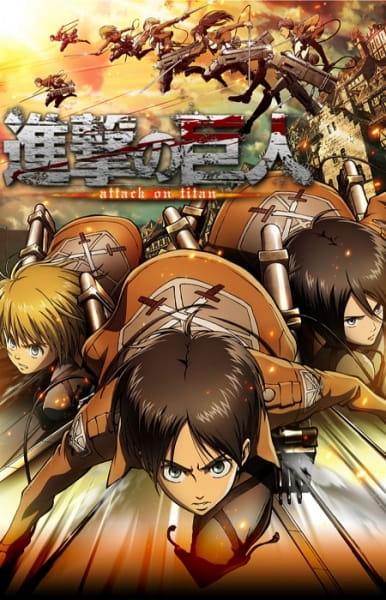

I have had this conversation dozens of times. Someone finishes Attack on Titan, sits in silence for a few minutes, and then messages me: "What do I watch now?" It's one of the hardest questions to answer because AoT is genuinely one of a kind. But after watching hundreds of anime over the past decade, I have found a handful of shows that come close — each in their own way.
This is not a list of shows that are "similar" in the generic sense. I'm going to tell you exactly what part of AoT each show captures, and why it works as a follow-up.
What Makes Attack on Titan Special
Before I give you the list, let's establish what AoT actually is at its core. It's not just a show about giants eating people. By the final season, it had become a meditation on war, genocide, cycles of violence, and what it means to fight for freedom when you don't know who the real enemy is.
The three things that make AoT irreplaceable: the slow-burn mystery that pays off completely, the moral complexity where no faction is purely good or evil, and the willingness to kill major characters without warning. These are the qualities I looked for in every recommendation below.
1. Vinland Saga (2019)
If AoT is about cycles of violence within nations, Vinland Saga is about cycles of violence within a person.
The story follows Thorfinn, a young Viking warrior who watched his father — the greatest swordsman of his era — die in front of him. He dedicates his entire childhood and adolescence to revenge. The first season is a brutal, breathtaking war story set in Viking Age Europe. The second season does something that AoT never quite managed: it shows a character genuinely trying to escape the violence that defines him.
What you'll recognize from AoT: the morally grey world where there are no true heroes, just survivors making hard choices. The political maneuvering behind the battles. The way personal tragedy drives massive historical events.
What makes it different: the second season is slower and more introspective. If you only want action, you might struggle. But if you want something that will stick with you for years, this is the one.
Watch if: You liked the political and moral complexity more than the pure action.
2. Fullmetal Alchemist: Brotherhood (2009)
I know, I know. You've probably already watched this. But if you haven't, it belongs at the top of any "what to watch after AoT" list.
Brotherhood shares AoT's structural DNA: a slow build that pays off with increasingly high stakes, a world with a terrible secret underneath its surface, and the feeling that the protagonists are always one step behind forces much larger than themselves.
The difference is that Brotherhood ultimately believes in hope in a way that AoT does not. It's a darker story that ends in light. AoT is a light story that ends in darkness.
Watch if: You want the same scale and complexity but with a more satisfying emotional resolution.
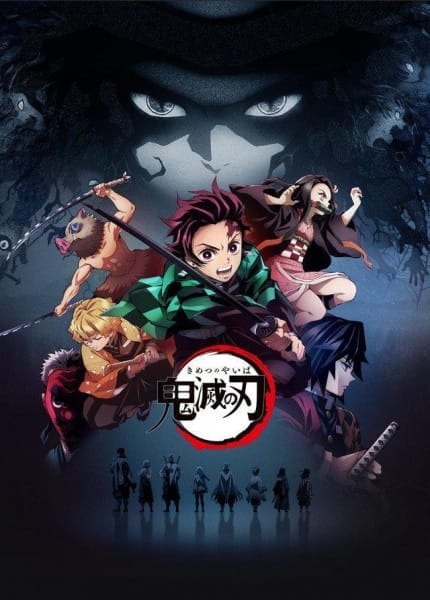
3. Demon Slayer (2019–ongoing)
Demon Slayer doesn't have AoT's political depth, but it does two things better than almost any other anime: visceral action sequences and emotional investment in characters you know might die.
The animation is on another level. The Mugen Train arc has some of the best theatrical animation ever put to screen. And the core emotional hook — a boy protecting his demon sister in a world that wants her dead — is simple but genuinely moving.
What you'll recognize from AoT: the looming threat that feels genuinely dangerous, the carefully built ensemble cast, and the willingness to let tragedy hit without softening it.
Watch if: You want to stay in the "dark world, compelling characters" zone without something as heavy as the AoT finale.
4. Code Geass (2006)
This one is less talked about now than it was a decade ago, but it absolutely belongs on this list. Code Geass is what you get when you take the political chess-match aspect of AoT and build an entire show around it.
The main character, Lelouch, is a disgraced prince with the power to give irresistible commands to anyone he looks at. He uses this to build a revolutionary army to overthrow the empire that destroyed his family. Every episode ends with a plan that either works perfectly or catastrophically fails.
The moment in Code Geass that most reminded me of AoT's finale: there is a twist in the final episode that recontextualizes everything you watched, makes the protagonist both a hero and a monster, and leaves you unable to decide how you feel about what you just saw. That's a rare achievement.
Watch if: You loved the political strategy and the morally complex protagonist arc more than the action.
5. 86 — Eighty Six (2021)
This is the most recent recommendation and the one I think is most underrated on this list. 86 is set in a future war where a country sends unmanned drones to fight on the front lines. Except the drones aren't unmanned — they're piloted by an ethnic minority that the government refuses to acknowledge as human.
The parallels to real-world discrimination and the way societies dehumanize people they want to use as weapons are impossible to miss. It hits the same notes AoT hit in its later seasons, when the show stopped being about monsters and started being about people.
The relationship between the two main characters — one a privileged commander who can't see the battlefield, one a soldier who has accepted he will die young — is one of the best in recent anime.
Watch if: You want something current, emotionally intelligent, and willing to ask questions it doesn't fully answer.
6. Tokyo Ghoul (Season 1 Only)
I'm putting the caveat right in the header. Watch Season 1 of Tokyo Ghoul. The rest of the series has problems. But that first season is a genuinely affecting story about a young man who is transformed into a monster and has to survive in a world that wants him dead from both directions.
What it shares with AoT: the horror of learning that the world is far more dangerous and morally compromised than you thought. The moment when Kaneki breaks in the second half of Season 1 is comparable to some of AoT's most disturbing character moments.
Watch if: You want something darker, shorter, and with a horror edge. Just stop after Season 1.
7. Claymore (2007)
Claymore is older and its animation shows its age, but the core premise is outstanding: in a medieval world plagued by demons who can disguise themselves as humans, half-human half-demon warriors called Claymores are humanity's only defense. But society fears and despises them.
The main character, Clare, is cold, powerful, and driven by a singular purpose that slowly reveals itself through the series. The world is genuinely dangerous. Characters you care about die. The ending is incomplete because the manga hadn't finished when the anime aired, but the journey is worth it.
Watch if: You want something with AoT's dark world-building and expendable characters but don't mind an older art style.
The One I'll Always Recommend First
If I could only give you one recommendation after AoT, it would be Vinland Saga. Not because it's the most similar, but because it's the most worthy follow-up. It takes the same questions AoT asks — what does violence do to people, what is worth fighting for, can cycles of hatred ever be broken — and answers them differently.
AoT says maybe not. Vinland Saga says maybe yes, but it will cost everything.
Between those two answers, you'll find most of what great storytelling can offer.