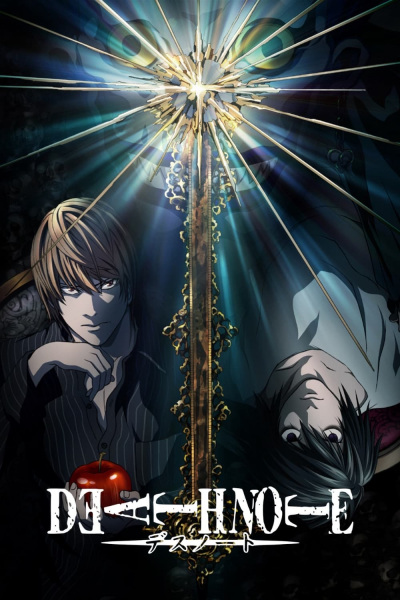

Death Note is the gateway drug that turned millions of casual viewers into serious anime fans. I know this because it happened to me. I was nineteen, thought anime was kids' stuff, and someone made me watch the first episode. By the end of the week I had finished all 37 episodes and started looking desperately for something — anything — that gave me the same feeling.
That feeling is specific and hard to describe. It's the pleasure of watching two impossibly intelligent people try to outmaneuver each other, knowing that one wrong move ends everything. It's chess, but with lives.
Finding anime that genuinely replicate that feeling took me years. This list is what I found.
What Death Note Actually Is
Most people describe Death Note as a thriller about a boy who finds a notebook that kills anyone whose name is written in it. That's accurate, but it misses what makes the show extraordinary.
Death Note is a show about the corrupting nature of power, told through a cat-and-mouse game between Light Yagami (who has the Death Note) and L (a detective trying to catch him). What makes it work is that both characters are right in different ways. Light's logic for why the world is better with him in charge is genuinely coherent. L's insistence that no one should have that kind of power is also genuinely coherent. The show lets them both be brilliant without endorsing either.
What you're looking for in a Death Note successor: psychological depth, high-stakes deception, and plots where intelligence is the weapon.
1. Code Geass (2006)
Code Geass is the closest anime equivalent to Death Note that exists. I say this without qualification.
The protagonist, Lelouch, is a disgraced prince who acquires the power of absolute obedience — he can give any person a single irresistible command. He uses this to build a revolutionary army, disguising himself as a masked figure called Zero while maintaining a normal student life.
The structural similarities to Death Note are deliberate: secret identity, genius protagonist, morally compromised methods, an opponent who is equally brilliant, and a spiral toward outcomes neither character intended. The final episode of Code Geass is one of the most discussed anime endings in history, for the same reason Death Note's endings generate arguments — you'll spend days thinking about whether what happened was right or wrong.
Watch if: You want the political strategy and identity-concealment aspects of Death Note with a larger cast and more action.
2. Psycho-Pass (2012)
Psycho-Pass is what happens when you take Death Note's question — "what if one person could decide who deserves to die?" — and build an entire society around it.
The setting: a future Japan where a system called the Sibyl System scans citizens' mental states and assigns them a "crime coefficient." Anyone whose number rises above a threshold is detained or executed by police, regardless of whether they've committed a crime yet. The protagonist is a new inspector trying to understand a system that everyone around her has accepted as normal.
The villain, Makishima, is the Death Note equivalent of this world: a man who has somehow made himself undetectable by the Sibyl System and uses that immunity to expose its fundamental injustice through increasingly disturbing acts.
The cat-and-mouse dynamic is real, the philosophical questions are substantive, and the show is willing to go to dark places with its answers.
Watch if: You want the philosophical depth and moral ambiguity of Death Note in a sci-fi setting with female leads.
3. The Promised Neverland (Season 1)
The caveat upfront: Season 1 of The Promised Neverland is excellent. Season 2 is deeply disappointing. Watch Season 1 and then decide whether to continue.
The premise: an orphanage that seems perfect. The children are well-fed, educated, and loved by their caretaker. Then two of them discover what the orphanage actually is — and spend the rest of the season in a desperate race to escape before the truth catches up with them.
What this shares with Death Note: the central tension between two brilliant actors — Emma and Norman on one side, their caretaker "Mom" on the other — who are constantly testing and probing each other's strategies while appearing to maintain normal behavior. The scenes where Emma and Norman are having a conversation about escape plans while visually communicating something completely different are as tense as Death Note's "I'll take a potato chip... and eat it" scene.
Watch if: You want a tightly constructed game of deception and counter-deception with children as the strategists.
4. Classroom of the Elite (2017)
This one is more low-stakes than the others on this list, but it scratches the same itch in a school setting.
The protagonist, Kiyotaka Ayanokoji, appears to be an average student at an elite school. He is not average. He is pathologically strategic in a way that makes Light Yagami look emotionally transparent. Every move he makes, every thing he says and doesn't say, is calculated at a level that the show reveals only gradually.
The school has a competitive system where classes earn or lose points based on their performance, and those points determine everything — class resources, privileges, and ultimately who gets expelled. Ayanokoji is manipulating outcomes several moves ahead while convincing everyone around him that nothing is happening.
Watch if: You want the "genius hiding their true capabilities" aspect of Death Note in a low-stakes setting that escalates significantly by Season 2.
5. Monster (2004)
Monster is what Death Note might look like if the writer had studied in Germany, read Dostoevsky, and decided to take twenty years instead of three.
Dr. Kenzo Tenma is a brilliant neurosurgeon in 1980s Germany who saves the life of a boy named Johan instead of the mayor, as he was pressured to do. Years later, Johan reappears — as the most dangerous serial killer in Europe, leaving a trail of deaths that Tenma feels responsible for. Tenma hunts Johan across Germany, trying to stop a monster he brought back to life.
The psychological depth in Monster is unmatched by anything else on this list, possibly by anything in anime generally. Johan is the most genuinely terrifying villain in the medium. Tenma is the most morally serious protagonist. The show is 74 episodes of slow, methodical tension that rewards patience in a way Death Note never needed to.
Watch if: You are willing to invest in something slower in exchange for something deeper.
6. Hyouka (2012)
Hyouka is a complete tonal departure — it's about high school students solving mysteries in their school's culture club — but it shares Death Note's most distinctive feature: a protagonist who thinks in a way you can actually follow step by step.
Oreki Houtarou is the laziest person in his school. He only expends energy when absolutely necessary. But when he does engage with a problem, his reasoning is so precise and so methodical that watching him solve mysteries feels like the intellectual version of a sports highlight reel.
If Death Note is chess at the speed of a thriller, Hyouka is chess at the speed of a Sunday afternoon. It's not for everyone. But for people who loved watching L and Light think, Hyouka offers that same pleasure without any of the violence.
Watch if: You were more drawn to the deduction and reasoning in Death Note than the moral stakes.
What to Watch First
If you want the closest possible Death Note experience: Code Geass. Same pacing, same moral complexity, same "who will outsmart whom" engine, different setting.
If you want something that will genuinely surprise you and has aged better in retrospect: Monster. It's slower, longer, and it asks harder questions. But thirty episodes in, you'll forget I even mentioned Death Note.
Both are excellent. Both are worth your time. Pick one based on whether you want your next anime to move fast or go deep.