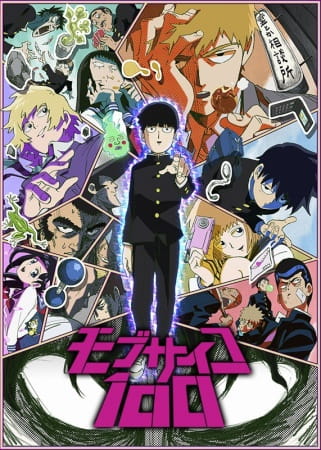

Mob Psycho 100 is easy to underestimate. It comes from the creator of One Punch Man, it has a deliberately simple art style, and its premise — a psychic middle schooler — sounds like a throwaway comedy. But Mob Psycho 100 is one of the most emotionally intelligent, visually spectacular, and quietly profound anime of the last decade. If you skipped it because of the art or the premise, this guide explains why it is secretly a masterpiece.
Light spoilers about themes follow, but nothing that ruins the story.
What Mob Psycho 100 Is About
Shigeo "Mob" Kageyama is an incredibly powerful esper — a psychic capable of extraordinary feats — but he is also a shy, awkward, deeply ordinary middle schooler who just wants to be liked and to talk to the girl he has a crush on. The central tension of the series is that Mob has decided his psychic powers do not matter; what matters is becoming a good person through his own effort. He works out, he joins the Body Improvement Club, he tries to make friends — all while suppressing enormous power that threatens to explode when his emotions overwhelm him.
That is the genius of the premise. Mob Psycho is not about a kid learning to use his powers — it is about a kid learning that his powers are the least important thing about him. It is a coming-of-age story wearing the costume of a psychic-battle anime.
Why the Animation Is Legendary
Studio Bones animated Mob Psycho 100, and it is one of the most visually creative anime ever made. Because ONE's original art style is so simple, the studio was freed to experiment wildly — the show shifts between art styles, incorporates paint-on-glass techniques, and delivers psychic battles of such fluid, explosive creativity that they routinely top "best animation" lists. The contrast between Mob's mundane daily life and the reality-bending spectacle of his powers is rendered with genuine artistry.
The animation is not just showing off, either. It is emotional. When Mob's suppressed feelings finally reach "100%" and his power erupts, the visual explosion mirrors the internal catharsis. Form and feeling are fused, which is the mark of great animation.
The Themes That Make It Special
Beneath the spectacle, Mob Psycho 100 is about self-worth. Every antagonist Mob faces represents a different flawed philosophy — people who define themselves by their powers, their status, their control over others. Mob defeats them not just physically but philosophically, by embodying a healthier truth: that your worth comes from who you are and how you treat people, not from what you can do.
The show is also genuinely kind. Its mentor figure, the delightful con-man Reigen, delivers some of the most sincere and moving life advice in anime, often by accident. The Body Improvement Club are pure-hearted himbos who support Mob unconditionally. In a genre full of cynicism, Mob Psycho 100 is warm, earnest, and deeply humane — and it earns that warmth without ever feeling saccharine.
How to Watch It
Mob Psycho 100 is refreshingly complete: three seasons that tell a full, satisfying story from beginning to end, with no filler and no loose threads. Watch them in order (Season 1, Season 2, Season 3), and consider the OVAs as nice bonuses. The whole series is around 37 episodes — a very manageable commitment for one of the most rewarding anime you can watch.
Do not let the art style or the premise fool you. Mob Psycho 100 is funny, thrilling, gorgeous, and genuinely wise. It is the rare anime that will make you laugh, drop your jaw, and quietly improve your outlook on life. It is a masterpiece hiding in plain sight.
The Reigen Factor
No guide to Mob Psycho 100 is complete without dwelling on Reigen Arataka, Mob's mentor and one of the greatest supporting characters in all of anime. On paper, Reigen is a fraud — a con man with zero psychic ability who runs a fake spirit-consultation business and employs the genuinely powerful Mob as cheap labor. He should be the villain, or at least a joke. Instead, he becomes the show's unexpected moral center, and his arc is one of its most rewarding surprises.
What makes Reigen work is that his advice, however self-serving his intentions, is almost always genuinely wise. Because he cannot rely on powers, he has spent his life developing real emotional intelligence and street-smart perspective, and the guidance he gives Mob about being a decent person is sincere even when Reigen himself does not always live up to it. The series is honest about his flaws — there is a whole arc built around Mob realizing his mentor is a fraud — but it ultimately argues that Reigen's ordinary human wisdom is more valuable to Mob than any psychic power could be. In a show about a boy with god-like abilities, the most important character is the one with none.
That inversion captures everything Mob Psycho 100 is about. Power is not what makes you worthwhile; character is. Reigen embodies that thesis, and his relationship with Mob — part mentor, part con, part genuine father figure — is the warm, funny, surprisingly moving heart of the series. If you needed one more reason to watch, watch it for Reigen. He is the kind of character you will find yourself quoting and thinking about long after the show ends, and he is proof that Mob Psycho 100 understands people far better than its goofy premise ever lets on.