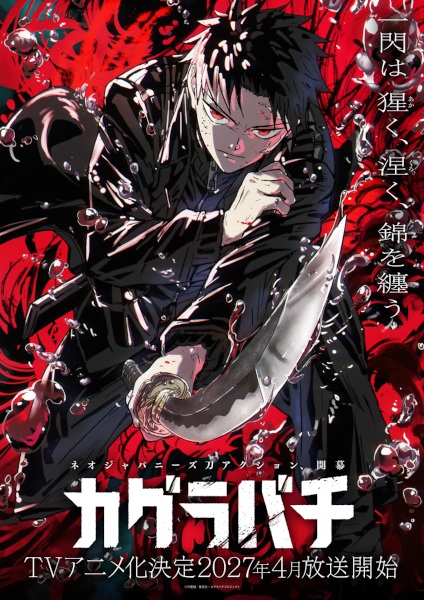

Few manga in recent memory have had a launch story as strange and wonderful as Kagurabachi. It began as an internet joke — a series fans hyped ironically before a single chapter mattered — and then something unexpected happened. The manga turned out to be genuinely excellent. The irony curdled into real enthusiasm, sales climbed, and a series that started as a meme became one of Shonen Jump's most exciting new properties. Now it is getting an anime adaptation, with Crunchyroll set to stream it, and the hype is no longer ironic at all.
Here is everything you need to know before the anime arrives: what Kagurabachi is, who its characters are, why it caught fire, and what to expect from the adaptation.
What is Kagurabachi?
Kagurabachi is a Japanese manga written and illustrated by Takeru Hokazono. It debuted in Shueisha's Weekly Shonen Jump in 2023, the same magazine that has been home to One Piece, Naruto, Bleach, Jujutsu Kaisen, and Demon Slayer. It is a supernatural action series built around sorcery, enchanted swords, and a very personal quest for revenge.
The premise is classic shonen done with confidence. Chihiro Rokuhira is the son of Kunishige Rokuhira, a legendary swordsmith who forged a set of enchanted blades that helped end a brutal war. Chihiro grows up in his father's shadow, training relentlessly and dreaming of a normal life. Then, in a single brutal sequence, sorcerers attack, his father is killed, and the enchanted swords are stolen. Chihiro is left with one blade and a single purpose: hunt down the people responsible and take back what was taken.
It is a revenge story, and it never pretends to be anything more complicated than that. But the execution is razor-sharp.
Why the hype is real
The story of Kagurabachi's popularity is genuinely one of the funniest things to happen in manga fandom. Before its debut, fans began posting exaggerated hype memes about it, treating an unknown series as if it were the second coming of shonen. The joke spread so far that the manga launched under an absurd spotlight.
And then it delivered. Readers who came for the irony stayed because the first chapters were tightly paced, beautifully drawn, and genuinely cool. Hokazono's art has a clean, kinetic energy, and his action choreography is easy to follow while still feeling dangerous. The revenge plot moved fast and hit hard. The meme became a self-fulfilling prophecy: people willed a hit into existence, and the creator rose to meet the moment.
What keeps readers engaged beyond the novelty is restraint. Kagurabachi is lean. It does not pad its arcs with endless tournament filler or dozens of side characters. It keeps its focus narrow — Chihiro, his sword, his targets — and that focus gives every confrontation weight.
The world and its sorcery
The setting blends a grounded, modern-feeling Japan with a hidden underworld of sorcerers who can manipulate reality through cursed techniques and enchanted weapons. The enchanted blades forged by Chihiro's father are the engines of the plot. Each is extraordinarily powerful, and in the wrong hands they are weapons of mass destruction. The conflict is essentially a race to control them.
Chihiro's own blade, Enten, is his inheritance and his primary tool. The way he uses it — combined with his ability to manipulate it in surprising ways — gives the action a distinct identity. Fights are less about screaming power-ups and more about clever, lethal applications of a sharp object in skilled hands. It is closer to a thriller than a typical superpowered slugfest, and that tonal difference is part of the appeal.
The characters
Chihiro Rokuhira is the cold, focused protagonist. He is not a cheerful, friendship-preaching hero in the classic mold. He is quiet, driven, and willing to do hard things to reach his goal. That edge makes him compelling, and the slow reveals of his humanity underneath the determination give the series its emotional pulse.
Around him, the supporting cast grows carefully. Char, a young sorcerer Chihiro crosses paths with, adds a human anchor and a reason for him to be something more than a weapon. The antagonists — the sorcerers who orchestrated the attack and the various factions hunting the enchanted blades — are menacing and distinct. Kagurabachi understands that a revenge story is only as good as the people the hero is hunting, and it invests in making them feel dangerous.
What we know about the anime
The big news is that an anime adaptation is officially happening and Crunchyroll has been confirmed as a streaming home, including international markets. For a series this popular, that is exactly the distribution muscle it needs to reach a global audience day and date with Japan.
As with most adaptations at this stage, the production has kept finer details close to the chest. But the core appeal translates naturally to animation. Kagurabachi is built on fast, clean swordplay and striking visual moments — precisely the kind of material that a strong studio can elevate. The manga's clear paneling and dynamic action give animators a fantastic blueprint to work from.
The expectation among fans is that a faithful, well-animated adaptation could turn Kagurabachi from a beloved manga into a mainstream anime hit, the way recent Jump adaptations have repeatedly broken out beyond their existing readerships.
Where to start
If you want to read ahead before the anime, the manga is available in English digitally through official Shonen Jump channels, which release new chapters simultaneously with Japan. It is an easy series to binge because the pacing is so brisk — you can get through the foundational arcs quickly and understand exactly why it caught on.
If you would rather go in fresh with the anime, that works too. Kagurabachi's premise is simple enough that you can start from episode one with zero prior knowledge and immediately understand the stakes: a son, a stolen legacy, and a sword.
How it fits in the new generation of shonen
Kagurabachi arrives at an interesting moment. The previous generation of Jump megahits — Demon Slayer, Jujutsu Kaisen, Chainsaw Man — has largely defined what modern shonen looks like: darker tones, slicker action, and a willingness to be cruel to characters. Kagurabachi fits that lineage while carving out its own identity through its tight focus and its swordsmith mythology.
It is not trying to be the biggest, longest, most sprawling epic on the shelf. It is trying to be sharp, stylish, and relentless. In a landscape full of hundred-episode commitments, a lean revenge thriller with gorgeous action is a genuinely refreshing pitch.
The art and action up close
Takeru Hokazono's artwork is one of the biggest reasons Kagurabachi converted skeptics into fans. His linework is clean and confident, and his action sequences have a clarity that a lot of modern manga lacks. You always know where the characters are, what they are doing, and what just happened. That readability matters enormously in a sword-based series, where a single strike can decide a fight.
The swordplay itself has a grounded, lethal quality. Chihiro does not power up for three chapters before landing a blow. Fights are quick, decisive, and clever, often hinging on the unusual properties of the enchanted blades rather than raw strength. This makes the action feel more like a high-stakes duel than a superhero brawl, and it gives the series a distinct identity in a genre crowded with screaming energy attacks. For an anime adaptation, this style is a gift — clear choreography and dramatic single moments are exactly what animators can elevate into showstopping scenes.
How Kagurabachi compares to other Jump hits
It is natural to compare Kagurabachi to the Jump series that came before it. Like Jujutsu Kaisen, it deals in sorcery and cursed power. Like Demon Slayer, it centers a swordsman driven by family tragedy. Like Chainsaw Man, it is willing to be cold and a little brutal. But Kagurabachi is not a copy of any of them.
Its defining trait is focus. Where many shonen sprawl outward with huge casts and endless tournaments, Kagurabachi stays tight on Chihiro's mission. That discipline keeps the tension high and the stakes personal. It is a series that knows exactly what it wants to be — a stylish revenge thriller — and refuses to dilute itself. In an era where long-running shonen can lose the thread under their own weight, that clarity of purpose feels deliberate and welcome.
What a great adaptation has to nail
For the anime to live up to the manga, a few things have to land. First, the swordplay needs weight and speed. The duels are the heart of the series, and choppy or unclear action would undercut everything. Second, the atmosphere matters. Kagurabachi balances a grounded modern setting with a hidden world of sorcery, and the adaptation needs to sell that contrast without tipping into generic fantasy.
Finally, the tone has to stay sharp. Chihiro is not a warm, joking hero, and softening him would be a mistake. The series works because its protagonist is cold and focused, and because the danger feels real. If the studio respects that edge and brings the action to life, Kagurabachi has every ingredient needed to become one of the breakout anime of its season.
What the hype says about manga fandom
The Kagurabachi phenomenon is worth thinking about beyond the series itself, because it says something about how manga fandom works in the internet age. A community willed a series into the spotlight as a joke, and that collective attention created real momentum. Publishers and creators have always relied on word of mouth, but the speed and scale of online fandom can now manufacture a launch event out of almost nothing.
What is striking is that the hype did not collapse when reality arrived. Plenty of memes burn out the moment people actually engage with the thing. Kagurabachi survived because the work backed it up. That is the crucial detail. The internet can get people to look, but it cannot make them stay — only good storytelling does that. Kagurabachi got both: the attention of a viral moment and the substance to justify it.
For the anime, this history is a double-edged sword. The built-in audience is enormous, which guarantees eyeballs on day one. But that same audience arrives with sky-high expectations and a sense of ownership over the series' success. The adaptation does not just have to be good — it has to feel like a payoff for everyone who championed it. That pressure is unusual for a relatively young series, and how the anime handles it will be part of the story. If it delivers, Kagurabachi will have completed one of the most unusual journeys in modern manga: from punchline to genuine pillar of its magazine.
Final thoughts
Kagurabachi is the rare series that survived being a joke and came out the other side as a legitimate hit. The meme got people in the door; the storytelling made them stay. With an anime adaptation confirmed and Crunchyroll handling the stream, it is poised to reach the massive global audience its hype always pretended it already had.
If you like revenge stories, sharp swordplay, and a hero with a cold streak and a clear mission, this is one to watch. Read the manga now or wait for the anime — either way, Kagurabachi has earned the attention it once only joked about deserving.